
Shingle Roofing Repair in Bonita Springs: 7 Signs Your Roof Needs Attention
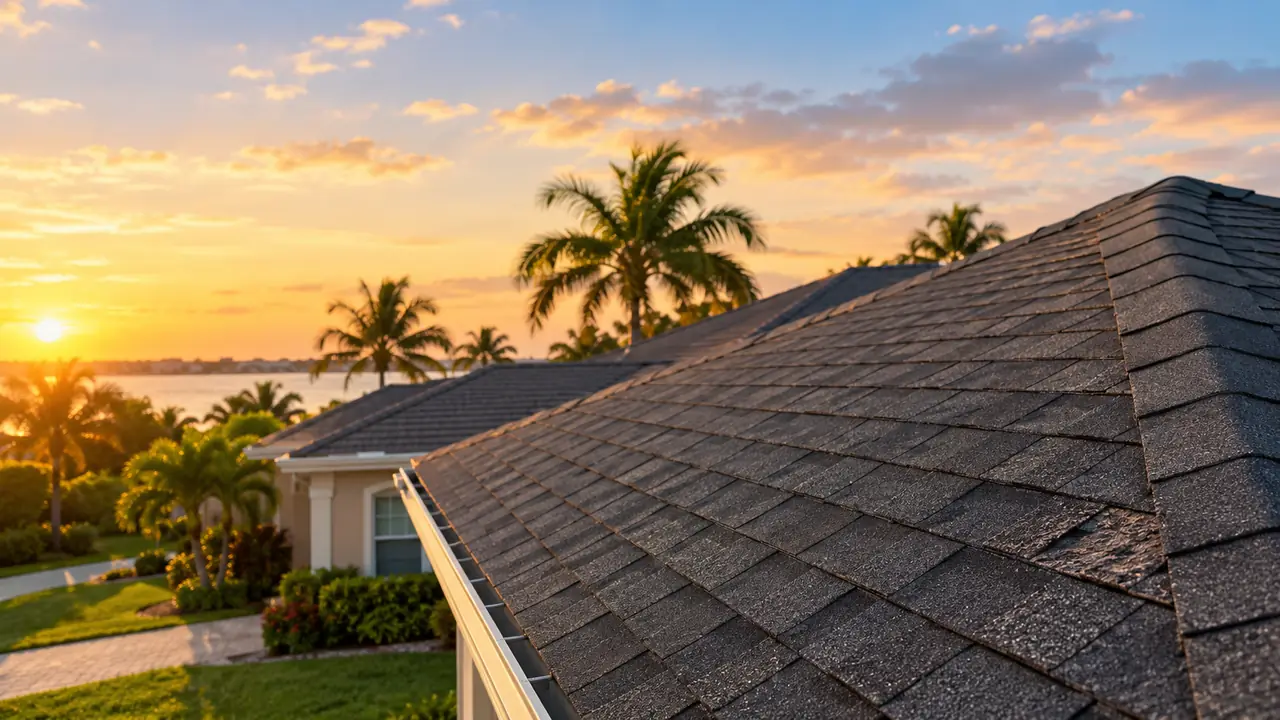
A shingle roof rarely fails all at once. It drops hints first: a few shingles on the lawn after a storm, a faint brown ring on a bedroom ceiling, a pile of gritty granules by the downspout. Catch those early and shingle roofing repair in Bonita Springs is usually a small job. Ignore them through a couple of rainy seasons and it can become a much bigger one.
Shingles in Southwest Florida put up with Gulf humidity, strong sun, and hurricane-season wind, sometimes in the same week. Seven signs tell you when it's time to pick up the phone.
Quick answer: The seven signs your shingle roof needs repair are missing shingles, curling or buckling edges, cracked shingles, heavy granule loss, water stains inside the home, damaged flashing, and sagging or soft areas. Any one of them can let water reach the deck, so a roofer should inspect it before the next heavy rain.
Key Takeaways
- Missing, curling, and cracked shingles are the most visible warning signs.
- Water stains inside the house mean the problem has already gone past the surface.
- Flashing around vents and chimneys is a common leak point.
- Repair fits localized damage. Widespread damage usually points to replacement.
- Stay off the roof. Look from the ground and let a licensed roofer do the rest.
What Are the 7 Signs You Need Shingle Roofing Repair in Bonita Springs?
Problems show up in three places: on the shingle surface, around vents and chimneys, and on the ceilings below. A walk around the yard with binoculars covers the first two. A flashlight in the attic covers the third. Never climb a wet or steep roof to check for yourself.
1. Missing or blown-off shingles
This is the easiest sign to spot and one of the most urgent. A gap in the shingle layer exposes the underlayment, and underlayment isn't meant to take weather on its own for long.
Check the lawn and flower beds after a storm, then look along ridges and corners, where wind lifts shingles first. Even one missing shingle is worth a call. The ones beside it have lost part of their overlap and are more likely to go next.
2. Curling, cupping, or buckled edges
Shingles that curl up at the edges or cup in the middle have usually dried out or lost their bond. Heat, weak attic ventilation, and age all play a part. Curled edges catch wind and let rain slip underneath.
If it's a patch, say one sun-facing slope, repair may handle it. If it's spread across the whole roof, that points toward age and a replacement conversation.
3. Cracked or split shingles
Cracks come from impact, age, or years of heating and cooling. One cracked shingle from a fallen branch is a straightforward fix. Cracks scattered across a whole slope are different, because the material itself may be failing.
4. Granules in the gutters or bare patches
Those sand-like granules protect the asphalt layer from UV. Finding a few in the gutters is normal, especially on a newer roof. Finding a lot, or spotting dark, bald patches on the shingles, means they're losing their protection. The sun takes it from there.
5. Water stains, damp insulation, or daylight in the attic
Brown rings on a ceiling, peeling paint, a musty smell in a closet, or daylight showing through the roof deck all say the same thing: water or air is getting in where it shouldn't.
Stains often appear a good distance from the actual leak, because water travels along rafters before it drips. Don't paint over a stain until someone has found the source.
6. Damaged or lifted flashing
Flashing is the thin metal that seals the joints around chimneys, vents, skylights, and the spot where a roof meets a wall. Those joints move and behave differently from the open field of shingles, which is why they're a classic leak point.
Look for rusted, bent, or pulled-away metal, and for dried-out or cracked sealant around penetrations. Fix it before the next storm, not after.
7. Sagging areas or soft spots
A dip in the roofline, or a patch that feels spongy, usually means the deck underneath has been wet for a while. This is the sign that moves a job from shingle repair toward structural work.
Don't walk on it. Have a roofer assess it from a safe position.
Should You Repair or Replace a Shingle Roof?
Repair makes sense when damage is limited to a few shingles or one flashing detail and the rest of the roof is in decent shape. Replacement makes sense when damage is widespread, the deck is compromised, or repairs keep coming back. A roofer's inspection settles it for your specific roof.
| What you see | Repair usually fits | Replacement usually fits |
|---|---|---|
| Missing shingles | A few, after one storm | Many, across several slopes |
| Curling or cracking | An isolated patch | Spread across the roof |
| Granule loss | A small area | Widespread bald spots |
| Leaks | One identifiable source | Multiple or recurring leaks |
| Roof deck | Dry and solid | Soft, wet, or sagging |
Repeated patching adds up. If you're fixing the same roof every season, a full roof replacement can end up making more financial sense than another round of repairs.
Some homeowners use that moment to compare materials too. Asphalt shingles have the lowest installed cost of the common residential systems, but metal roofing is worth a look if you plan to stay in the house a long time.
What Should You Do When You Spot Roof Damage?
Stay off the roof, document what you see, and book an inspection. A temporary cover can limit water damage until repairs happen, but it isn't a fix. Acting quickly matters because water keeps spreading while you wait.
- Look from the ground. Binoculars show a lot. Note the slope and the spot.
- Take dated photos. Include the roof and any interior stains. You'll want them for your own records and possibly for insurance.
- Protect the inside. Move furniture away from stained areas and set out a bucket if something's dripping.
- Call a licensed roofer. V&M handles roof repairs and leaks across Southwest Florida and can tell you whether a repair will hold.
- Check your insurance policy. If storm damage is possible, ask your insurer what a claim requires before you authorize major work.
- Get the scope in writing. The estimate should say what's being repaired, what's being replaced, and what's included.
How Does Southwest Florida's Climate Wear Down Shingles?
Heat, UV, humidity, and storm wind stress shingles in different ways. Sun dries out the asphalt, humidity feeds algae, and strong gusts can lift shingles that have lost their seal. That's why checking your roof matters here more than people tend to think.
Sun and heat show up as curling, cracking, and granule loss. Humidity shows up as dark streaks, which are algae. The streaks are mostly cosmetic, but they're a reminder that moisture lingers on the roof. Some shingles use copper-infused granules to inhibit algae growth, and V&M installs that kind of product.
Wind is the big one in hurricane season. Modern dimensional shingles are rated for winds up to 130 mph, according to V&M's product specifications. That rating assumes the roof is installed correctly and still in sound condition, so a roof with lifted or missing shingles won't perform like one that's intact.
Older roofs may also have 3-tab shingles, which are thinner and less durable than architectural (dimensional) shingles. If yours is a 3-tab roof showing wear, expect the conversation to lean toward replacement sooner.
How Much Does Shingle Roof Repair Cost in Bonita Springs?
There's no flat price. The cost depends on how many shingles are damaged, whether flashing or decking needs work, how steep and accessible the roof is, and what materials are involved. A written estimate after an inspection gives you a real number.
Be wary of a quote that arrives with no one looking at the roof. Hidden deck damage, for instance, can't be priced from a phone call.
If you're weighing a repair against a new roof, V&M's roof cost calculator gives a quick ballpark for a full replacement. Treat it as a starting point and confirm the figure with an on-site inspection.
How Often Should You Check Your Shingle Roof?
A quick look from the ground a couple of times a year and after any major storm is a sensible habit. Book a professional inspection whenever you notice a warning sign or after significant storm damage.
When you look, scan for lifted or missing shingles, check the gutters for granules, and glance at the flashing around vents. Keep gutters clear too, since debris traps water along the roof edge.
Shingle Roofing Repair FAQs
How do I know if my shingle roof needs repair?
Look for missing, curling, or cracked shingles, heavy granule loss, water stains on ceilings, damaged flashing, and sagging areas. Check from the ground or with binoculars, and look in the attic with a flashlight after rain. If you spot any of these, schedule an inspection, because small issues can let water reach the roof deck.
Can I repair a shingle roof myself?
It's not a good idea beyond looking from the ground. Roofs are a fall risk, wet shingles are slippery, and a patch placed over the wrong spot can hide the real leak. A licensed roofer can find the actual source, repair it properly, and tell you whether other areas need attention.
Does homeowners insurance cover shingle roof repair?
It depends on your policy. Many policies treat sudden storm damage differently from wear and tear or age-related deterioration. Document the damage with dated photos, read your policy, and call your insurance company before authorizing major work. Ask what they need for a claim, including any inspection or estimate requirements.
Will a shingle repair match the rest of my roof?
Not always perfectly. Shingles fade and weather over time, so new ones can look slightly different beside an older roof. A good roofer will choose the closest available match in style and color. If appearance matters a lot to you, ask about options before the work starts.
Is a leaking shingle roof an emergency?
A small leak is urgent, though not always a full emergency. Water keeps spreading, so limit the damage inside, document it, and book an inspection promptly. If water is coming in heavily, call a roofer right away about a temporary cover and keep clear of any ceiling that's bulging or sagging.
Getting Your Roof Looked At
Shingle roofing repair in Bonita Springs is easiest, and usually cheapest, when you catch the problem while it's still small. A missing shingle, a stained ceiling, or a bit of lifted flashing is worth a closer look today instead of after the next storm.
If you'd like a professional opinion, V&M Roofing offers free estimates and serves homeowners across Southwest Florida. We're a Florida licensed roofing contractor (License No. CCC1334217), and you can reach us at (239) 201-5108. No pressure, just a straight answer on whether your roof needs a repair or something more.