
Asphalt Shingles
Naples New Construction Roofing: How to Choose the Right Roof for Your New Home
Published
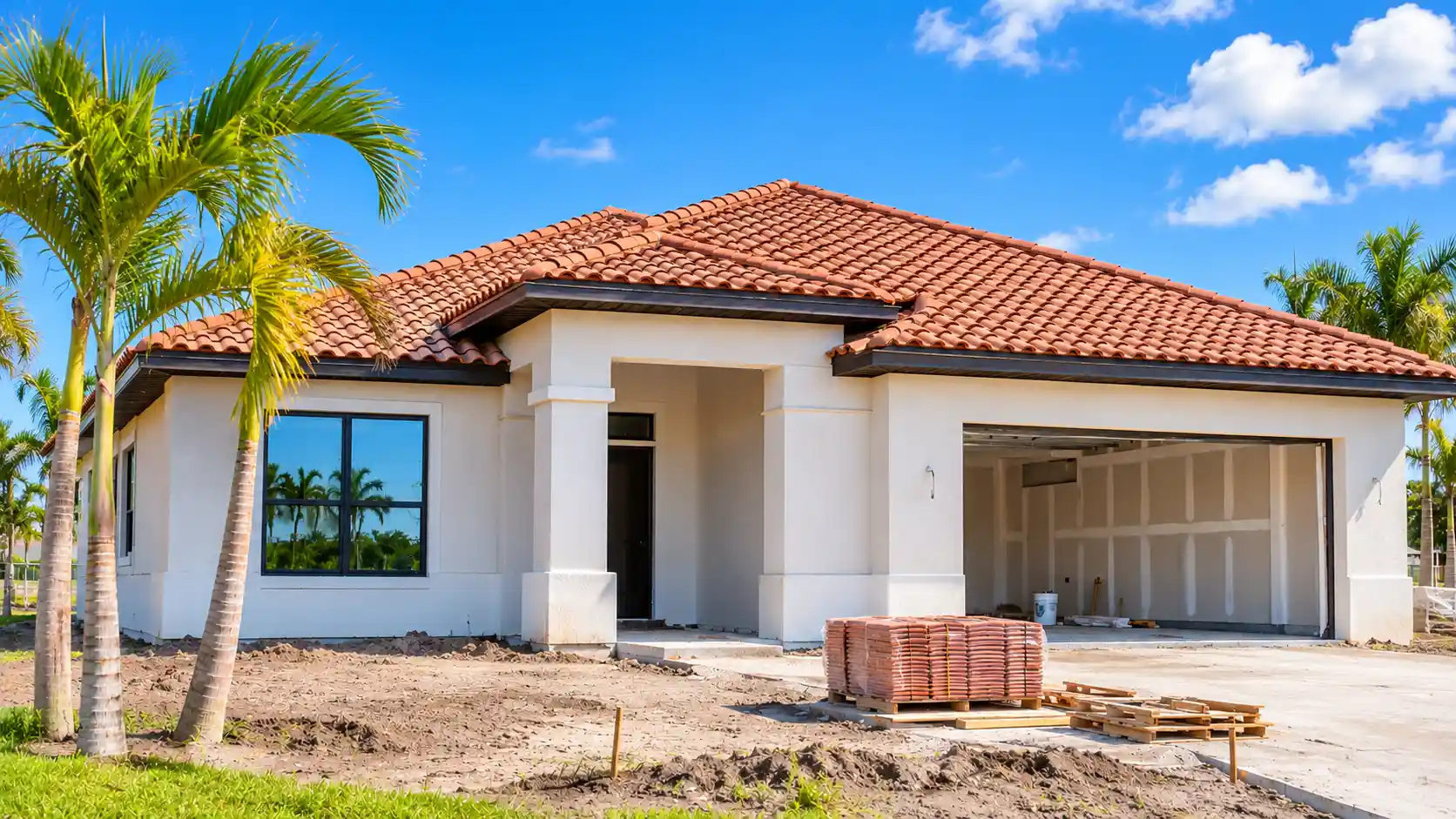
Your new home is framed, the walls are going up, and someone asks what kind of roof you want. It sounds like a small decision. It isn't. Naples new construction roofing has to deal with strong sun, heavy summer rain, salty air, and hurricane season, and the roof you pick now affects your maintenance, comfort, and repair bills for years.
A new build also gives you something a re-roof never will: a clean start. There is no old decking to patch and no hidden rot to find. That makes it the best time to get the roof right.
The right roof for a new construction home in Naples is one that fits Florida's wind and rain, your budget, and your builder's schedule. Most homeowners compare asphalt shingles, metal, and tile. A licensed local roofer should confirm the material meets local building requirements and permit rules before installation.
Key Takeaways
- Choose your roofing material early. It affects framing, budget, and the builder's schedule.
- Naples roofs face sun, rain, humidity, and storms, so installation details matter as much as the material.
- Asphalt shingles, metal, and tile are the three most common options, and each has real trade-offs in cost, weight, and upkeep.
- Ask for a written, itemized estimate that names the materials, the warranty, and who handles permits and cleanup.
- Hire a licensed, insured roofer who has worked on new builds and will coordinate with your builder.
How Is New Construction Roofing Different From a Re-Roof?
New construction roofing means installing a roof on a home that is still being built. There is no old roof to tear off, so the work follows the builder's schedule and the approved plans. A re-roof replaces the roof on a finished home.
That difference changes a lot. On a new build, the roofer works around framers, window crews, and inspectors. Timing matters. If the roof goes on late, rain can damage the interior. If the roofer shows up before the structure is ready, everyone waits.
The upside is control. You can plan the roof pitch, overhangs, ventilation, and materials as part of the design instead of as an afterthought. Details like flashing around walls, vents, and skylights are easier to do well when access is simple.
It also means more people share responsibility. The builder, the roofer, and sometimes an architect or engineer all have a say. When they don't talk to each other, small problems turn into expensive ones. A good roofer asks about the plans early and flags concerns before any material goes on the roof.
What Does Naples New Construction Roofing Need to Handle?
A Naples roof has to handle intense sun, heavy seasonal rain, high humidity, salt air near the coast, and the risk of tropical storms and hurricanes. Because of that, both the material and the installation details matter. A strong product installed poorly will not perform like one installed correctly.
Southwest Florida is hard on roofs. Sun breaks down surfaces over time. Summer storms push water at edges and joints. Strong wind can lift anything that isn't fastened and sealed properly. Here are the main pressures to plan for:
- Heat and UV: constant sun ages roofing surfaces and raises attic temperatures.
- Rain: heavy downpours test flashing, valleys, and underlayment, which is the water-resistant layer under the visible roof.
- Wind: storm winds put stress on edges, ridges, and fasteners.
- Humidity and salt air: moisture and salt can speed up wear on some metals and fasteners, especially closer to the water.
Notice that most of these pressures come down to details, not just the material you pick. Underlayment, flashing, fastening, and ventilation do a lot of work that nobody sees once the roof is finished.
Local building rules apply too. Wind-resistance and installation requirements exist for a reason, and they can change. They also vary by location, so confirm them with your roofer and the local building department instead of assuming.
Which Roofing Materials Work Best for a New Home in Naples?
Asphalt shingles, metal roofing, and tile are the three options most Naples homeowners compare. Shingles usually cost less upfront, metal is widely used in Florida for durability and low maintenance, and tile offers a classic look with extra weight. The best choice depends on your budget, your home's design, and its structure.
Asphalt Shingles
Asphalt shingle roofing is a very common choice for a reason. It comes in many colors and styles, it's easy to find, and most roofers know it well. The upfront cost is usually lower than metal or tile.
The trade-off is lifespan. Shingles typically don't last as long as metal or tile in a hot, wet climate, so plan for that in your long-term budget. If you go this route, ask about products rated for high-wind areas.
Metal Roofing
Metal roofing has a strong reputation in Florida. Panels interlock and fasten in ways that hold up well to wind-driven rain, and many finishes are designed to reflect heat. Metal usually costs more upfront than shingles, though it often needs less maintenance over time.
Material and coating matter, especially near saltwater. Ask which metal and finish the roofer recommends for your location, and why.
Tile Roofing
Tile roofing is a familiar sight across Southwest Florida. It gives a home a warm, Mediterranean look and handles heat well. It is also heavy.
A tile roof needs a structure designed to carry that weight, which is why the decision should happen before framing is finished, not after. Underlayment and fastening matter a lot with tile, since the tiles are only the visible layer.
Here is a quick side-by-side comparison. Costs and lifespans vary by product, installer, and home design, so treat this as a starting point, not a quote.
| Factor | Asphalt Shingles | Metal | Tile |
|---|---|---|---|
| Upfront cost | Generally lower | Generally higher | Generally higher |
| Weight | Lighter | Light | Heaviest |
| Upkeep | Periodic checks, earlier replacement likely | Typically low | Low to moderate, broken tiles need replacing |
| Look | Many colors and styles | Modern or traditional profiles | Mediterranean and Spanish styles |
| Best fit | Budget-focused builds | Long-term durability focus | Style-driven designs with the structure planned for weight |
How Does the New Construction Roofing Process Work?
The process usually runs from plan review and material selection to permits, deck prep, underlayment, installation, flashing, and final inspection. Each step has to line up with the builder's schedule. Exact steps vary by material and project, so your roofer should explain the plan before work starts.
- Plan review. The roofer studies the blueprints, roof shape, pitch, and any special features.
- Material selection. You choose a roofing system that fits the design, budget, and structure.
- Permits and scheduling. Permits are arranged, usually by the builder or the roofer, and the crew is scheduled around framing and other trades.
- Deck and underlayment. The roof deck is checked, then covered with underlayment and any needed water barriers.
- Installation. Shingles, metal panels, or tile go on, along with ridge, edge, and vent components.
- Flashing and details. Valleys, walls, vents, and other openings get sealed.
- Inspection and cleanup. Required inspections happen, and the site is cleared of debris and nails.
People tend to overlook the hidden steps. Underlayment and flashing are covered up once the roof is done, yet they protect the home from leaks. Ask your roofer how they handle both, and ask for photos of that stage if you can't be on site.
How Long Does a New Construction Roof Take to Install?
Installation time depends on roof size, shape, material, weather, and how the rest of the construction is moving. Simple roofs go faster than complex ones with many valleys and angles. Your roofer should give you a schedule based on your actual plans and explain what could cause delays.
Florida weather plays a big role. Summer storms can pause work for a day or longer. Material delivery matters too, especially for specialty tile or metal profiles. Ask when materials will be ordered and who is responsible for confirming the delivery date.
A realistic schedule has some buffer built in. If a roofer promises a very short timeline without seeing your plans, ask how they got that number.
How Much Does New Construction Roofing Cost in Naples?
Cost depends on roof size, pitch, complexity, the material you choose, and local labor and permit costs. There is no honest flat number without seeing your plans. A written, itemized estimate from a licensed roofer is the best way to get a real figure for your home.
These factors move the price the most:
- Roof size and shape
- Material choice and brand
- Roof pitch and height
- The number of valleys, dormers, and openings
- Underlayment and ventilation needs
- Site access and scheduling
When you compare bids, make sure each one covers the same scope. A cheaper quote that skips flashing details or uses a lighter underlayment isn't really cheaper. Look at what's included, not just the bottom line.
What Should You Ask a Roofer Before Hiring One?
Ask about license and insurance, experience with new construction, the exact materials and brands, warranty terms, and how they coordinate with the builder. Written answers are better than verbal ones. A good roofer will welcome these questions.
- Are you licensed and insured in Florida, and can I see proof?
- Have you worked on new construction homes in Naples or nearby areas?
- Which roofing material, underlayment, and flashing products do you plan to use?
- What does the warranty cover, and who backs it, the manufacturer or your company?
- How do you coordinate with the builder and inspectors?
- Who handles permits and cleanup?
- What happens if weather delays the job?
Licensing information for Florida contractors is public record, so you can also check it yourself. It takes a few minutes and tells you a lot.
Should You Choose the Roofer or Let the Builder Handle It?
It depends on your contract and how involved you want to be. Many builders work with roofers they trust, and that can keep the job moving. Others let homeowners pick. Either way, you should know who is doing the work, which materials go on the roof, and what warranty comes with it.
If your builder picks the roofer, ask for the same details you'd want from a roofer you hired yourself. If you choose, tell the builder early so schedules line up. Neither path is automatically better. Clear communication and written details are what protect you.
Planning Your Naples New Construction Roofing
Naples new construction roofing comes down to a few good decisions made at the right time. Pick a material that fits your budget and your home's design. Ask how the roofer handles flashing, underlayment, and ventilation. Get everything in writing, and keep your builder in the loop.
If you're still comparing options, a short conversation with a local roofer can save you from changes later. V&M Roofing is happy to talk through your plans, materials, and timeline whenever you're ready.
Frequently Asked Questions
Do I need a permit for a new construction roof in Naples?
New homes go through permits and inspections, and roofing is usually part of that process. Your builder or roofing contractor typically handles the paperwork. Rules differ by jurisdiction and change over time, so confirm current requirements with the local building department before work starts.
Which roof type lasts longest on a new home in Naples?
Metal and tile are generally known for longer service lives than asphalt shingles. Actual lifespan still depends on installation quality, ventilation, maintenance, and weather exposure. Ask your roofer for the manufacturer's written warranty on the exact product, since coverage terms vary by brand and product line.
Can I choose my own roofer if my builder already has one?
Often yes, but it depends on your contract. Some builders use their own crews or preferred roofers, while others allow owner-selected contractors. Read your builder agreement, ask early, and make sure any roofer you bring in can work around the construction schedule and inspections.
When should I choose my roofing material?
Choose it as early as you can, ideally during design and before the roof structure is finalized. Material affects weight, framing needs, underlayment, flashing, and budget. Tile, for example, is heavier than shingles, so the structure has to be planned for it. Talk with your builder and roofer together.
What should a new construction roofing estimate include?
A clear estimate lists the roofing material and brand, underlayment, flashing, ventilation, scope of work, cleanup, permit handling, warranty terms, and payment schedule. Written details help you compare bids fairly and avoid surprises. If something is vague or missing, ask for it in writing before you sign.