
Asphalt Shingles
Roof Repair Marco Island, FL: When to Repair vs. Replace
Published
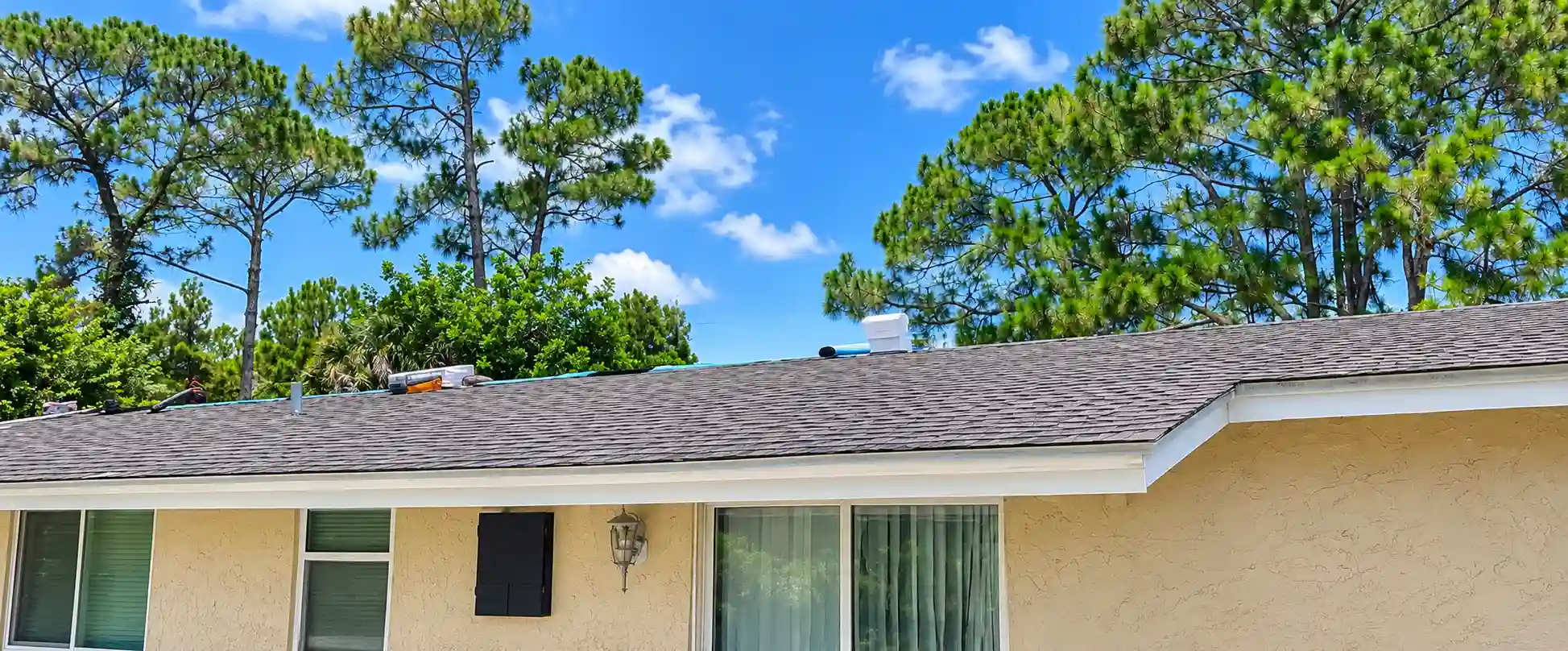
You spot a brown stain on the ceiling. Or a few shingles turn up in the yard after a windy night. Either way, your next thought is probably the same one everybody has: do I need a whole new roof?
Maybe. Not always. If you've searched roof repair Marco Island and wondered who to trust, this guide gives you a way to sort it out yourself. It covers what usually calls for a repair, what points toward replacement, and what to ask before anyone climbs a ladder at your house.
Island roofs age faster
Living on Marco Island is great. Your roof doesn't get to enjoy it. It sits in direct sun almost every day, in humid, salty air that's hard on metal parts like flashing, fasteners and vent covers. And from June 1 to November 30, hurricane season puts it on watch. Even storms that miss the island can bring heavy rain and flying debris.
That's why small problems grow quickly here. A loose strip of flashing seems harmless in March. A few August downpours later, you're staring at a stain on the ceiling. Catch it early and it's a small job. Wait, and it usually isn't.
When a repair will do
Plenty of leaks come down to one failed part. Roofs have a lot of spots where something pokes through: vent pipes, chimneys, skylights. The rubber boot around a pipe cracks in the sun. Sealant dries out. Flashing lifts at an edge. Each of those costs far less to fix than a new roof.
Damage in one area counts too. A few shingles lifted by wind, or a couple of tiles cracked by a branch, can be swapped out without touching the rest, as long as the material around them is still firm and attached. And if the roof is fairly new and a storm took off a few pieces, repair is normally the sensible call. You're paying to fix damage, and the roof has plenty of years left.
Typical repair jobs include replacing missing shingles, swapping out cracked or slipped tiles, resealing flashing, replacing pipe boots and vent covers, and patching small sections of damaged decking. V&M Roofing offers roof repairs for leaks, missing shingles and storm damage, and we start every job by finding out what's actually wrong.
Don't forget the roof's age
Age changes the math. The same repair on a mid-life roof can last for years. On a roof near the end of its life, it might only buy you a season or two.
So ask your roofer how old they think your roof is and how long that material usually lasts. The answer tells you whether you're fixing a roof or just postponing a bigger decision.
Signs a replacement may be coming
Sometimes a repair is a bandage on a bigger problem. These are the signs that the roof as a whole is wearing out:
- Leaks in more than one spot, or leaks that come back after being fixed
- Shingles that curl, crack or shed granules (check your gutters for grit)
- Cracked or slipped tiles spread across big areas, not just one corner
- Ceiling stains, peeling paint or a musty smell indoors
- Daylight showing through the roof boards when you look from the attic
- Soft or sagging areas in the roof deck
- An old roof that needs money spent on it every year
Tile roofs need a closer look
Under the tiles there's a waterproof layer called underlayment, and it can wear out while the tiles still look perfect. If it has failed across the roof, patching tiles just chases leaks around. If you have tile roofing, ask the inspector about the underlayment by name.
Keep a tally of repairs
One repair is normal upkeep. Three or four in a couple of years is a pattern. Add up what you've spent, then ask what a roof replacement would cost. When the repair bills start closing in on that number, a new roof is probably the better use of your money, and you stop playing whack-a-mole with the same spots.
Repair or replace: the short version
| Situation | Usually points to |
|---|---|
| A few missing shingles or cracked tiles | Repair |
| One leak at a vent, pipe or chimney | Repair |
| Storm damage on a newer roof | Repair |
| Leaks in several rooms or places | Replacement likely |
| Large soft or sagging areas | Replacement likely |
| Repeated repairs on an aging roof | Replacement likely |
Treat that as a rough guide. Every roof is different, and only a proper look will tell you what yours needs.
What a real inspection looks like
It should be more than a quick glance from the yard. The roofer checks the surface for missing, cracked or lifted material, then looks closely at flashing, vents, chimneys and the other places water likes to sneak in. Gutters and roof edges matter too. So does what's happening inside: stains on ceilings, damp insulation, daylight showing through boards in the attic, soft spots in the roof deck.
Ask for photos. Someone who's confident in their work will gladly show you the problem and walk you through your options. If a roofer won't show you what they found, get a second opinion.
Our inspections are free and come with no obligation. We'll tell you whether you need a repair or a replacement, and if a repair will do, that's what we'll recommend.
What to do after a storm
The first few hours matter, and a few simple steps keep you safe and protect any insurance claim:
- Stay off the roof. Wet surfaces and loose material make it dangerous.
- Look from the ground for missing shingles, shifted tiles or debris.
- Check ceilings and the attic for water stains or drips.
- Take dated photos of everything before you clean up.
- Cover openings only if you can do it safely, or call a roofer to tarp them.
- Call your insurance company and read your policy to see what it covers.
Coverage depends on your policy and on what caused the damage, so ask your agent before you assume anything.
What about cost?
Repairs cost less up front and replacement costs more, but price alone doesn't settle it. A string of small repairs on an aging roof can add up to a lot of money without fixing the real issue, which is the roof's age. Cost also moves with the size of the roof, its material, the slope, how easy it is to reach and how much decking needs work.
That's why any number you read online is only a guess. The only price you can plan around is a written estimate after someone has inspected your roof.
Picking a roofer on Marco Island
- Check the contractor's license on the Florida Department of Business and Professional Regulation website. V&M Roofing is licensed and insured, and our Florida license number is CCC1334217.
- Ask for a written estimate that lists the work and the materials.
- Ask who will be on your roof and who you can call with questions.
- Ask who handles the permits, since roof work usually needs them.
- Get a second opinion if the quote is big or the roofer is pushy.
- Be careful with anyone who pressures you to sign on the spot.
At V&M, the person who sells you the job stays on it until it's finished, and our crews are our own employees, so the people on your roof know our standards. We also manage the permits and follow Collier County code on Marco Island jobs.
Your next step
Before you call anyone, take twenty minutes to gather a few things. Walk through the house and look at the ceilings. Peek into the attic if you can do it safely. Take photos of any stains or damage and jot down where and when you noticed them. Find out roughly how old the roof is.
Then book an inspection with a licensed contractor and bring your notes. The roof repair Marco Island homeowners need can range from a small sealant fix to a full tear-off, and a few good photos help the roofer give you a straight answer faster.
V&M Roofing serves Marco Island and the rest of Southwest Florida. Call (239) 201-5108 to book your free roof inspection. We're a licensed and insured Florida roofing contractor, license CCC1334217.
Frequently Asked Questions
How do I know if my roof needs repair or replacement?
Look at how widespread the problem is. Damage in one or two spots, or a leak from a single vent or pipe, usually points to repair. Leaks in several places, curling or cracked roofing across large areas, a soft deck, or repeated repairs on an old roof point toward replacement. An inspection gives you a firm answer.
How often should I have my roof inspected?
Once a year is a common recommendation, and it's smart to book one after any major storm. With strong sun and salt air on the island, regular checks help you catch small problems before they turn into leaks.
Will my homeowners insurance pay for roof repair?
It depends on your policy and on what caused the damage. Sudden storm damage is usually handled differently from wear and age. Read your policy, take dated photos, and talk to your agent before the work begins.
Can I fix a roof leak myself?
Climbing on a roof is risky, especially when it's wet, and a patch in the wrong spot can trap water and cause more damage. Inside, you can move belongings and catch drips with a bucket. Then call a roofer. If you need a temporary cover, a roofer can put a tarp up safely.
How long does a roof repair take?
It depends on the size of the problem, the material and the weather. Small jobs can often be finished quickly, while bigger repairs take longer. Your roofer should give you a timeline along with the written estimate.