
Tile Roofing
New Spanish Clay Roof Tiles Fort Myers: Pros, Cons & Costs
Published
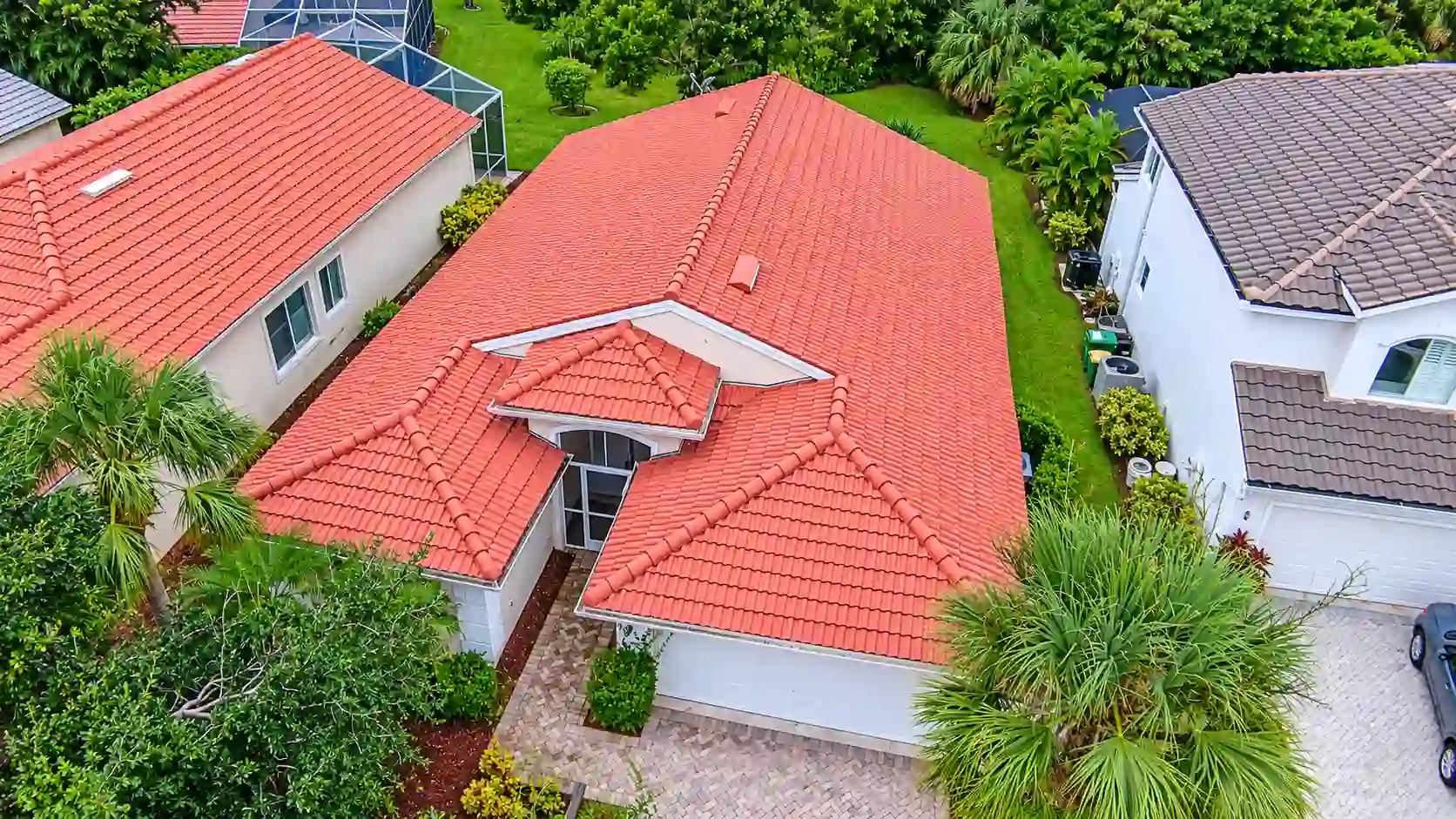
Your roof may look fine from the street. Then a summer storm leaves a stain on the guest room ceiling, and the roofer tells you the tiles are in good shape but what's underneath isn't. Now you have a decision to make.
This is very common in Southwest Florida. Should you repair the roof or replace it? That's hard to decide, and if you type new Spanish clay roof tiles Fort Myers into a search bar, you'll probably end up with more questions than answers.
This guide explains the pros and cons of clay tile, what affects the cost, and how to choose a roofer. Think of it as advice from a neighbor who knows roofing.
What You're Getting
Spanish clay tile is made from natural clay that's shaped and fired in a kiln. Two main types create the classic look. Barrel tile is usually made of two pieces, a pan and a cap, which form a curved profile. S-tile gives you a similar curve with a single piece. Flat clay tile is also available if you want a more modern look.
Colors vary by manufacturer, but the color itself comes from the clay. That's why clay tends to hold a rich color in strong Florida sun. Imported clay tile usually has more color depth and a hand-finished look, and it usually costs more than domestic clay or concrete tile.
One more thing to keep in mind. A new clay tile roof is more than tile. It also includes the roof deck, underlayment, flashing and fasteners. The tile is just the part you can see.
The Pros of Clay Tile
Long lasting
Clay tile roofs can last for decades. How long yours lasts depends on the tile you choose, how it's installed and how well it's maintained.
Handles tough weather
Roofs in Fort Myers deal with strong UV, heavy rain and humid air for most of the year. Water runs off tile easily, and tile won't rot, burn or get eaten by insects. Tile is also installed on a raised system, so air can move underneath it. That can help reduce the heat that reaches your attic.
Wind resistance
Florida has strict wind rules for roofs. Clay tile systems can get Florida or Miami-Dade product approvals. However, the approval covers the whole roof system, not only the tile, and the system has to be installed the way the approval says. That makes a skilled installer very important.
Matches your home's style
If your home is Spanish or Mediterranean in style, a new clay tile roof keeps the original look. Some communities have rules about tile color and style, so check with your HOA early on.
The Cons of Clay Tile
Clay tile isn't right for every house or every budget. Here's what to think about:
- Heavy: Clay tile is much heavier than shingles. The roof deck and trusses need to be strong enough to hold the weight. A good roofer checks the structure before ordering tile, especially if your roof is shingle now.
- Expensive: Tile usually costs more than asphalt shingles, and clay usually costs more than concrete tile.
- Brittle: Tile holds up well to weather, but walking on it can crack it. If a satellite installer or gutter cleaner has been on your roof, some tiles may have been broken without anyone knowing.
- Underlayment wears out first: The waterproof layer under the tile usually wears out before the tile does. An older tile roof can leak even when the tiles look fine.
- Needs skill: Tile is installed differently than shingles, and problems can show up if it isn't done correctly.
- HOA limits: Your community may limit the color and style you can choose.
Many of these points affect the price, so let's look at cost next.
What Affects the Cost
We can't give an exact price per square foot here. It varies by roof and by material, and any price in a blog may be out of date by the time you read it. What we can do is show you what moves the price:
- Size and shape of the roof: A roof with lots of hips, valleys, dormers and wall connections needs more cutting and more flashing.
- Where the tile comes from: Imported clay usually costs more than domestic clay or concrete.
- The roof deck: When the old roof comes off, any rotted or damaged decking has to be replaced.
- Underlayment: A better waterproofing system costs more, but it protects the house better.
- Structural work: Some homes need reinforcement to carry the weight of clay tile.
- Permits, inspections and access: HOA requirements can add to the list too.
Because so many things affect the price, estimates for new Spanish clay roof tiles Fort Myers homeowners receive can be very different from each other. One estimate may include new underlayment and flashing, and another may not. To compare them fairly, ask for an itemized breakdown.
If you'd like a rough idea of cost, our roof cost calculator is a good place to start. Still, the only number you should plan around is a written estimate after an inspection. V&M also lists a financing option on our website.
Clay tile can last for decades, so many people see it as a one-time expense. That's only true if the underlayment and flashing are checked along the way.
Clay vs. Concrete Tile
Concrete tile is generally denser and heavier than clay. It comes in more styles and colors, and it usually costs less. Clay has a richer, more traditional color and usually costs more. Both can meet Florida's wind requirements when they're installed correctly, and both can give you the Spanish look.
Things to Know About Fort Myers
The sun in Fort Myers is strong, and afternoon storms and humidity are common. Hurricane season runs from June 1 to November 30. Hurricane Ian in September 2022 showed how much a roof in Southwest Florida has to handle. A few local points to keep in mind:
- Wind: Ask which Florida or Miami-Dade product approval applies to the tile and fastening system, and make sure the roof is installed that way.
- Moisture: Mildew and algae can darken tile over time. If you want to pressure wash your roof, ask your roofer first, because harsh spraying can damage tile.
- Permits: A roof replacement usually needs a permit and a final inspection. Your roofer should apply for the permit.
- Insurance: Ask your insurance agent how a new roof may affect your policy.
What a Good Tile Inspection Covers
A proper inspection goes beyond a look from the ground. The roofer should check:
- The tiles, for cracks, slipped pieces and missing pieces
- Ridge and hip caps
- Flashing around chimneys, vents, skylights and walls
- The condition of the underlayment
- The roof deck and trusses, from the attic if possible
- Ceilings and the attic, for stains and damp insulation
Ask for photos of anything the roofer finds. If someone can't show you the problem, get a second opinion.
When to Replace Instead of Repair
If only a few tiles are cracked or slipped, a roofer can usually fix them one at a time. Loose ridge caps and worn flashing can also be repaired without replacing the whole roof. If the underlayment is in fair shape, repair may be the best choice.
However, replacement may be needed if you have leaks in several places, cracked tiles over large areas, a soft roof deck, or underlayment that has failed across the roof. If repair bills keep coming back, replacement usually makes more sense.
If that sounds like your house, ask for a detailed roof replacement estimate. Make sure it includes a deck inspection, the underlayment and the type of tile, so you can see what you're paying for.
How to Choose the Right Roofer
Tile work is a specialty. A roofer who's great with shingles may not be the right choice for clay tile. Here's what to ask:
- How many clay tile roofs have you finished recently? Ask to see photos of completed work and to speak with a reference.
- Are you licensed? Check on the Florida Department of Business and Professional Regulation website, and ask for proof of insurance.
- Can I get a detailed written estimate? It should list the tile brand and style, underlayment, fastening method, flashing and the price of any deck work.
- How will you confirm my structure can hold clay tile?
- Who will apply for the permit and schedule the inspections?
- What warranties come with the job? Get the tile manufacturer's warranty and the workmanship warranty in writing, and ask what each one covers.
- Will your own employees or subcontractors be on my roof? Who do I call with questions?
If you're looking for a Fort Myers roofing contractor with tile experience, V&M Roofing serves Fort Myers and the rest of Southwest Florida. We install clay and concrete tile, and every job starts with a free inspection and a check of the roof deck and structure. We're licensed and insured, our Florida license number is CCC1334217, and our crews are our own employees. The person who sells you the job stays on it until it's finished.
Frequently Asked Questions
How long will a clay tile roof last in Florida?
Clay tile is very long lasting, and depending on the type, the installation and the maintenance, it can last many decades. The underlayment and flashing may not last as long as the tile, so ask your roofer to check them during inspections. The manufacturer's warranty will tell you what the manufacturer guarantees.
Is clay tile worth the extra cost?
It depends on what you want and on your house. Clay tile usually costs more than asphalt shingles, but it may last much longer, and it's a good match for Spanish and Mediterranean-style homes. If you plan to stay in the house for a long time, the longer life is often a good investment. If you might sell soon, ask a local real estate agent how buyers in your area feel about tile roofs.
Can clay tile withstand a hurricane?
No roof is completely hurricane proof, but a tile roof that meets code should be able to handle strong winds. The most important thing is the whole roof system: the deck fastening, underlayment, tile and flashing all need to meet requirements. Ask your roofer which product approval applies and how the tiles will be fastened. After any severe storm, have the roof inspected even if it looks fine from the outside.
Can my house support a clay tile roof?
Clay tile is heavy, so the structure has to be able to support it. If the house was built for tile, it probably can. If it has a shingle roof now, it needs a closer look. Before ordering tile, a roofer should inspect the roof deck and trusses. If strengthening work is needed, ask for it to be listed in the estimate as a separate line item.
How long does a tile roof installation take?
At V&M, tile installation usually takes three to five days. It can take longer depending on the roofline, the type of tile and the weather. Ask for a time estimate in your written estimate, and ask how rain will affect the work.
Getting Started
Before you call a roofer, take 15 minutes to get ready. Take photos of your roof from the ground and of any stains on your ceilings. Write down how old the roof is. Check with your HOA for limits on tile color and style. Then use the questions above.
Choosing new Spanish clay roof tiles for a Fort Myers home is a big decision. Whichever roofer you hire, ask them to check the roof deck and structure before any tile is ordered.
Call V&M Roofing at (239) 201-5108 to book a free inspection. We're licensed and insured roofing contractors in Florida, license CCC1334217.