
Emergency Roofing Services in Central Florida: What to Do When Your Roof Fails
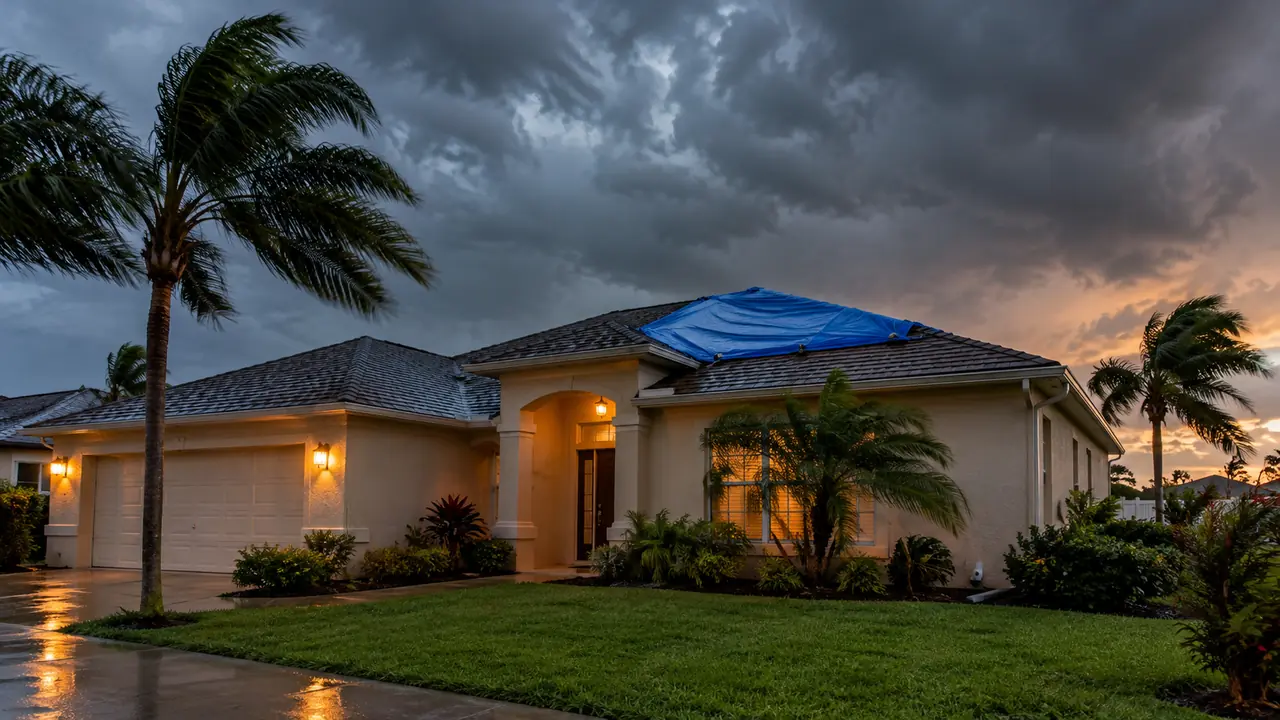
Roofs pick terrible moments to fail. Two in the morning, mid-squall. The day after a limb comes down. The one week when every roofer in the county is booked solid. If you've never had to hire emergency roofing services in Central Florida, the first time tends to be a scramble, and scrambling is how people end up signing with whoever knocked on the door first.
A little preparation fixes most of that. Some of what follows is general Florida roofing sense, and some comes from how we run jobs at V&M Roofing. We'll say which is which.
When a Leak Is an Emergency (and When It Isn't)
Water coming through the ceiling right now is an emergency. So is daylight in the attic, a tree on the roof, a ceiling bowing under trapped water, or flashing that peeled back in the wind.
What ties those together is water getting in, or a roof that might not hold. Insulation and drywall act like sponges, and in Florida humidity mold doesn't need long to show up. A day or two, sometimes less.
Other things look bad and usually aren't urgent. Granules in the gutter. A few curled shingle edges on a dry afternoon. A stain that has been the same size since spring. Get those inspected, sure. Just don't pay emergency rates for them.
The First Hour
Stay off the roof. Wet shingles, tile and metal are slick, and a fall will cost you far more than any leak could.
Inside, move furniture and electronics out from under the drip and set down a bucket. If water is anywhere near a light fixture or an outlet, shut that circuit off at the breaker before you touch it.
Then take photos and video before you clean anything up. Ceiling, walls, the attic if you can get up there safely, and whatever you can see from the ground. Your insurance company will want every bit of it, and the timestamps help.
After that, call. Don't burn an hour reading reviews while the drywall soaks. Make the call, say plainly that water is coming in, and do your homework on the company while you wait.
Why Roofs Here Take Such a Beating
Hurricane season runs June 1 through November 30, so it stretches well into fall. But storms with names are only part of the story.
Summer afternoon thunderstorms shove rain sideways. The gusts lift shingle edges, and once a seal breaks, the next gust does the rest. Months of heat and UV dry the materials out and crack the sealant. Humidity grows algae on the shady slopes. A roof can look fine from the street and still be a couple of storms away from leaking.
Central Florida also has a lot of old oaks, and limbs come down in storms that never make the news. A roof that's 15 or 20 years old has very little margin left.
What a Roofer Does on the First Visit
The first visit is usually about stopping the water, not fixing the whole roof. That surprises people. It's still the right order.
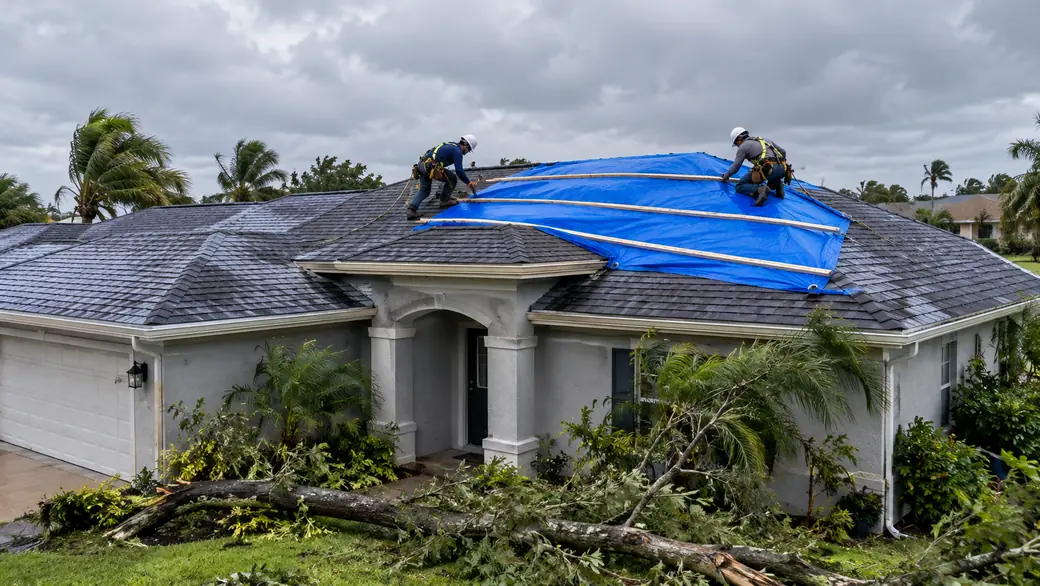
Somebody has to find the actual entry point, and it is almost never directly above the stain. Water runs along rafters and decking before it drips, so the hole can sit several feet from the damp spot. A decent roofer checks the attic as well as the roof surface.
Then the opening gets covered. For a bigger breach, that means a heavy tarp fastened to the deck with battens. Sandbags alone don't count. A badly secured tarp rips off in the first strong gust and leaves you worse off than before. Smaller openings can get a temporary patch of underlayment and sealant.
Loose debris comes off so it can't puncture the cover. Photos get taken. And you should leave the visit knowing what a permanent fix involves, roughly how long it takes and what you'll need to decide. If someone leans on you to sign for a full replacement before the roof has even dried out, treat that as a red flag.
One more thing about tarps: they're temporary. In Florida sun and wind, most last weeks, not months. Think of one as buying time.
Repair or Replace?
It comes down to the roof's age, how widespread the damage is, and what the roof is made of.
A handful of missing shingles, torn flashing, a single punctured spot: that's a repair. If the rest of the roof is in decent shape, there's no reason to rip it all off. V&M's repair work covers leaks, missing shingles and storm damage, and that is where most small jobs land.
Leaks in several places, or a roof near the end of its life, point the other way. At some point you're paying for patches on something that needs a roof replacement anyway.
Material shapes the answer too. Asphalt shingles are the usual pick in Florida, and V&M puts their lifespan at 30 to 50 years. A metal roof runs 50-plus years on V&M's numbers and costs more up front. A tile roof is rated at 40 to 80 years, but tiles crack when something lands on them, and the underlayment below often gives out before the tiles do. A tile roof can leak while looking perfect from the curb.
Unless the structure is compromised, don't commit to a full replacement in the first 24 hours. Dry it in, then spend a few days comparing quotes.
Insurance and Paperwork
Read your policy before you need it. If you haven't, read it today. The deductible is the part that bites: many Florida policies carry a separate wind or hurricane deductible set as a percentage of the home's insured value rather than a flat amount. On a small repair, that can change the math completely.
Most policies expect you to take reasonable steps to stop further damage, and many reimburse temporary measures like tarping. Keep every receipt and get an itemized invoice. Whether a given repair is covered depends on your policy and on what caused the damage, and sudden storm damage gets treated very differently from age-related wear.
Report the claim quickly. Florida sets deadlines for filing, and waiting makes everything harder to prove. Hold on to damaged materials if you can, because an adjuster may want to see them.
You don't have to use the contractor your insurer suggests. And read anything before you sign it, especially a document that mentions your claim or hands a contractor control over it.
Hiring Without Getting Burned
After every big storm, crews start knocking on doors. Some are legitimate. Plenty aren't, and a few are gone by the time you have a warranty question.
Start with the license. Florida requires roofing contractors to be state licensed, so ask for the number and look it up on the Florida DBPR website. It takes about two minutes. V&M's is CCC1334217, printed right in the footer of its homepage. A contractor who hesitates to give you theirs has answered the question for you.
Next, look for a real local address and a phone that somebody answers. V&M lists an office at 236 Oakside St in Lehigh Acres, with phones staffed Monday through Saturday, 7am to 7pm. Ask for a written estimate that spells out the scope and the materials. Be wary of big upfront deposits, and of any line about the price going up if you don't sign today.
Ask who will actually be on your roof. Plenty of companies hand jobs to whichever subcontractor is free that week. V&M's installers are in-house W-2 employees, every crew has been with the company for 5+ years, and the two lead supervisors for 7+. Ask whether the person who sold you the job stays on it, too. At V&M, the rep who sells your job manages it through completion.
Manufacturer credentials are worth asking about. V&M is Owens Corning Preferred and Tamko Pro Gold Certified, and it lists memberships with the cities of Fort Myers, Naples, Bonita Springs and Sanibel and the Village of Estero.
Last, get any workmanship warranty in writing. A warranty from a company that won't exist next year isn't worth much.
What Emergency Roof Repair Costs
Nobody can give you an honest single number. Price moves with roof size and pitch, how hard it is to reach, the material, how much is damaged, and whether you need a tarp, a patch or a real repair. After a major storm, demand spikes, and prices and wait times tend to climb with it.
Tarping is usually priced separately from permanent work, and it costs a lot less. Get an itemized written quote so you can see what you're paying for. If the damage points toward replacement, V&M's roof cost calculator gives you a ballpark before anyone visits, and the company also lists financing through Enhancify.
Cutting the Odds of a Repeat
You can't stop a storm. You can make the roof a harder target.
Have it inspected once or twice a year and after any serious weather. Past 15 years old, get it checked before hurricane season starts, not after. Trim branches that hang over it. Keep gutters clear so water doesn't back up under the roof edge. After heavy rain, look at the attic ceiling for damp spots. Small repairs on a dry day cost a fraction of an emergency call.
Who to Call
V&M Roofing is a licensed Southwest Florida contractor based in Lehigh Acres. It has served the region for 10 years, has installed more than 2,500 roofs, and has location pages for Fort Myers, Cape Coral, Naples, Bonita Springs, Estero and several other cities. If your roof is leaking or storm damaged, call (239) 201-5108, Monday through Saturday, 7am to 7pm. The free inspection form on the website promises a reply within 24 hours, so for an active leak the phone is the faster route.
Frequently Asked Questions
What counts as a roofing emergency?
Anything where water is actively getting into the house or the roof's structure is at risk. Active leaks, missing sections, a tree or heavy debris on the roof, and a ceiling that sags or bulges all qualify. Slower problems like granule loss or a few curled shingles can wait for a regular appointment, though you shouldn't ignore them for long.
How long does emergency roof repair take?
Once a crew is on site, a tarp or temporary patch is often done within a few hours. Getting a crew there is the harder part. After a major storm everyone is backlogged, and the wait can stretch to days. Permanent repairs run from a single day for small jobs to several days for a replacement, depending on weather, permits and material availability.
Does homeowners insurance cover emergency roof repairs?
Often, when the damage comes from a sudden event like wind or a fallen tree. Many policies also reimburse reasonable temporary repairs such as tarping. Wear and age are usually excluded, and your deductible may be a percentage of your home's value. Call your insurer promptly, take photos and keep every receipt.
Can I tarp my roof myself?
We'd advise against it. Roofs are slippery in the rain, falls cause serious injuries, and a tarp that isn't fastened properly will blow off and tear. Protecting the inside of the house is your job: move belongings, set out buckets and shut off power to affected circuits. Leave the roof to a licensed professional.
How much do emergency roofing services cost?
It varies with roof size, pitch, material, access and the amount of damage. A tarp costs far less than a permanent repair, and storm demand can push prices up. Ask for an itemized written estimate before work starts, and compare at least two quotes for any permanent repair or replacement.